


JKL allocates the manufacturing overhead based on the normal and expected number of production machine hours which are 20,000 for the new year. Therefore, the JKL’s predetermined manufacturing overhead rate for the new year will be $60 ($1,200,000/20,000) per production machine hour. Before the beginning of any accounting year, it is determined to estimate the level of activity and the amount of overhead required to allocate the same. At a later stage, when the actual expenses are known, the difference between that allocated overhead and the actual expense is adjusted. Now management can estimate how much overhead will be required for upcoming work or even competitive bids.

When is it better to switch from a single POR to activity-based costing (ABC)?

For instance, assume the company is bidding on a job that will most likely take $5,000 of labor costs. The management can estimate its overhead costs to be $7,500 and include them in the total bid price. The predetermined rate is also used for preparing budgets and estimating jobs costs for future projects. Cost accountants want to be able to estimate and allocate law firm chart of accounts overhead costs like rent, utilities, and property taxes to the production processes that use these expenses indirectly. Overapplied overhead is the inverse, occurring when the Actual MOH is less than the total overhead Applied to Production.
How to Choose the Right Allocation Base
You’ll master the key formulas, learn how to allocate costs properly across departments, see real-world examples, and discover best practices to control overhead expenses. Calculating overhead rates accurately is critical, yet often confusing, for businesses. Therefore, this predetermined overhead rate of 250 is used in the pricing of the new product. This depends on the size and complexity of your business, but a good rule of thumb is to strike a balance between accuracy and practicality.
How Flxpoint Can Help Reduce Overhead Costs
- From the perspective of a cost accountant, predetermined overhead rates are a forecasting tool, essential for budgeting and planning.
- Overhead expenses are items that are required to sell products and run the company in general.
- The accurate calculation of product cost is essential for effective inventory valuation, pricing strategy, and compliance with Generally Accepted Accounting Principles (GAAP).
- It also uses examples to illustrate key points, such as the calculation of predetermined overhead rates and variance analysis.
- This means the company overestimated its overhead costs or applied the rate to a higher volume of activity than anticipated.
- Once the Predetermined Overhead Rate has been established, it is used to assign costs to specific jobs or products throughout the year.
This adaptability can lead to more accurate costing, pricing, and ultimately, a stronger financial position. The key takeaway is that in today’s fast-paced business environment, the ability to pivot and adjust contribution margin overhead costs can be a significant competitive edge. Embracing flexibility is not about abandoning structure; it’s about enhancing the ability to respond to the unexpected with precision and foresight.
Selecting an Estimated Activity Base
For example, consider a manufacturing company that set its predetermined overhead rate based on an expected annual production of 10,000 units. However, due to an unexpected surge in demand, the actual production rose to 12,000 units. The increased production volume would likely lead to a decrease in the overhead rate per unit, as the fixed costs are now spread over more units. Conversely, if production had decreased, the company would need to increase its overhead rate to ensure costs are covered. The overhead rate helps businesses understand the proportion of indirect costs relative to direct costs. The predetermined overhead rate computed above is known as single or plant-wide overhead rate which is mostly used by small companies.
Sales and production decisions based on this rate could be faulty
- The fact is production has not taken place and is completely based on previous accounting records or forecasts.
- In this article, we will discuss the formula for predetermined overhead rate and how to calculate it.
- Cost accountants want to be able to estimate and allocate overhead costs like rent, utilities, and property taxes to the production processes that use these expenses indirectly.
- POHR equals Estimated Total Manufacturing Overhead Costs divided by Estimated Total Activity Base.
POR makes these projections more precise because it allocates overhead consistently. The predetermined manufacturing overhead rate is more than a formula it’s a tool to keep costing, pricing, and budgeting predictable. By choosing the right allocation base, including the right overhead items, and updating for seasonal or capacity changes, you get a clear picture of production costs. By incorporating these flexible approaches, businesses can ensure that their overhead management is not only reflective of current conditions but also responsive to changes.
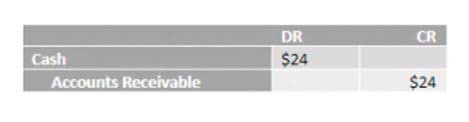
Using the Wrong Allocation Base
This option is best if you’re unsure of how to calculate your predetermined overhead rate or if you don’t have the time to do it yourself. Again, that means this business will incur $8 of overhead costs for every hour of activity. That means this business will incur $10 a predetermined overhead rate includes of overhead costs for every hour of activity.